
In this third week of Ordinary Time, the readings continue to reflect the themes of encouragement to faith communities and challenges to embrace what is new so that we may maintain what is sacred. Please consider writing your own responses to the readings or reflection questions below, or to reply to other peoples’ contributions. Also, if you know of a person, either religious or lay person, who has modeled the Xaverian way, and wish to share their story, please feel free to add to the comments section.
Like yesterday, today’s readings challenge us to embrace what is unknown. We are not to ignore our fears or pretend they do not exist, but instead recognize that these fears-of failure, rejection, mortality, are all real. In doing so, by being honest and vulnerable about what makes us uncomfortable, we can experience a transcendence, a grace that shines bright in the midst of the confusion caused by life’s storms. The author to the Hebrews, ever the cantankerous cheerleader for their community, recounts the difficulties faced by heroes of the Old Testament, and how they connected to the mystery of God even as they knew they would most likely not see the fruits of their labor fulfilled in their lifetimes. Like Jesus in Mark, the author to the Hebrews reminds the audience that faith does not let them avoid the storms, but to engage the storms and emerge stronger, regardless of the immediate outcomes.
(Painting below “Jesus Calms the Storm” by Neil Thorogood)

Next, read and reflect upon “A Description of the Xavrerian Charism”
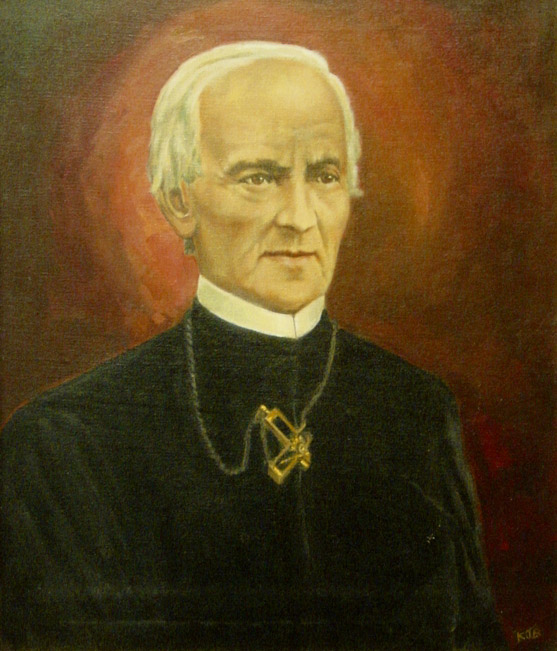
(Above portrait of Theodore James Ryken, Xaverian Brothers)
- In the Charism statement, we acknowledge that like the Founder, Theodore James Ryken, we are called to be open to being “put in our place.” This implies the need for a disposition of humility but also one of gratitude. How can we experience this gratitude while at the same time navigating the very real and tangible challenges and conflicts that come with trying to live a spiritual life in an environment that may be inhospitable to this life?
- It is important to not overlook the humorous detail in the Gospel of Mark that Jesus was fast asleep while out on the boat with the apostles. Ironically, it is the apostles who were actually asleep in this situation. What does this mean and why does Jesus so badly want them and us to wake up? What does Jesus want us to wake up to and recognize, perhaps for the first time?
 Ordinary and Unspectacular in the Liturgical Year