April 30-Wednesday of the Second Week of Easter

“Go and take your place in the temple area,
and tell the people everything about this life.”
When they heard this,
they went to the temple early in the morning and taught.
When the high priest and his companions arrived,
they convened the Sanhedrin,
the full senate of the children of Israel,
and sent to the jail to have them brought in.
But the court officers who went did not find them in the prison,
so they came back and reported,
“We found the jail securely locked
and the guards stationed outside the doors,
but when we opened them, we found no one inside.”
When the captain of the temple guard and the chief priests heard this report,
they were at a loss about them,
as to what this would come to.
Then someone came in and reported to them,
“The men whom you put in prison are in the temple area
and are teaching the people.”

Acts 5: 20-25

Here are the complete readings for Wednesday, April 30, 2025.
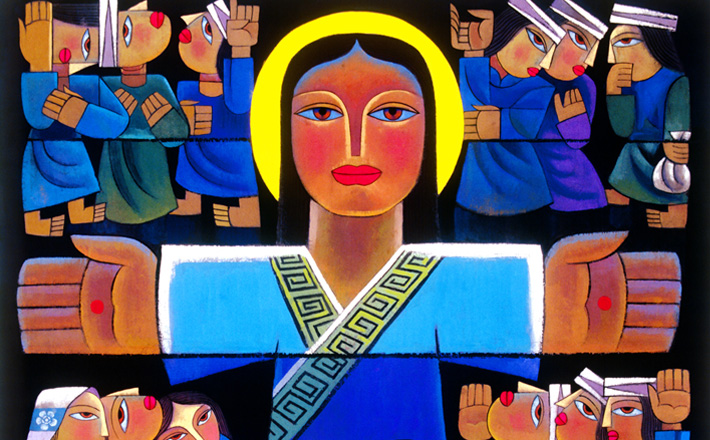
(“The Risen Lord” by He Qi)

The story from the Acts of the Apostles offers inspiration about faith in times of adversity and grace under pressure, or in this case, persecution. While helpful, I’d invite us to look at the specific image of the prison and its symbolism for the Easter season. Just when the members of the Sanhedrin think they have aborted the mission of the Twelve, the authorities look around and realize that Jesus’ disciples are gone. They are gone because they have been freed in the most authentic sense of the word freedom. From their experience of the resurrection, they are liberated from their trepidation of answering the call to be a companion with God. They have left behind the anxiety that was stoked by their former desires for power and self-serving affirmation. Can we also reflect on the acts of these ordinary souls from the past consider our own place of freedom or confinement? Like the disciples, our repentance reminds us that we don’t need any of the ersatz priorities deemed necessary by our culture to acquire happiness, because we realize that when we accept the reality of the transcendent within us, we are never alone and intimately connected to each other and to God. Even separations and persecutions, while emotionally and physically painful, cannot hold back the flow of the Holy Spirit, who refuses to allow us to be imprisoned in any way.

Friend,
This common rule
is not meant to be a burden to you.
My yoke is easy and my burden is light.
It is presented to you in the hope
that through reflection on it
you may strengthen your courage
to follow Christ
as a follower of Theodore James Ryken.
By faithfulness to it
may you discover
in God’s own time
ways to incarnate anew
the vision of Theodore James Ryken
and the charism of the Brothers of Saint Francis Xavier
in the life of the world.

– The Fundamental Principles of the Xaverian Brothers

God, your vision for us is clear even as we struggle to understand it. Often we are afraid of what might happen to us tomorrow, especially if we allow ourselves to truly listen to you and your Spirit. Break open the walls that close us in, and encourage us to choose freedom over fear. Help us celebrate the gifts of the present moment and this day that we are blessed to encounter with you.

Amen

April 29-Tuesday of the Second Week of Easter

The community of believers was of one heart and mind,
and no one claimed that any of his possessions was his own,
but they had everything in common.
With great power the Apostles bore witness
to the resurrection of the Lord Jesus,
and great favor was accorded them all.
There was no needy person among them,
for those who owned property or houses would sell them,
bring the proceeds of the sale,
and put them at the feet of the Apostles,
and they were distributed to each according to need.

Thus Joseph, also named by the Apostles Barnabas
(which is translated “son of encouragement”),
a Levite, a Cypriot by birth,
sold a piece of property that he owned,
then brought the money and put it at the feet of the Apostles.

Acts 4: 32-37

Here are the complete readings for Tuesday, April 29, 2025.

(“Acts of the Apostles” tapestry-Beauvais Cathedral Beauvais, France)

Thomas called Barnabas is featured in today’s reading from the Acts of the Apostles. He was called the “son of encouragement” for his support of the newly formed community of believers, known then simply as “The Way” for their commitment to Jesus’ calls to discipleship. The setting was idyllic with everyone sharing their worldly possessions with one another. While the human condition quickly set in, resulting in factions and selfish claims to authority and possessions, the precedent had been set. The first Christians, however imperfectly, were committed to what is now known as the common good. Societies that strive for the common good prioritize conditions by which every member’s innate human dignity is respected. To do this in any society, whether it is a neighborhood, house of worship, or nation, requires humility and demands sacrifice. Can we today carve out some common good in our often atomized culture and sub-cultures? The answer is a resounding yes, especially in this Easter season. We have reason to hope now just as much as Barnabas and his band of sisters and brothers did, for it is grounded in the trust in the active, encouraging, and providential direction from the Holy Spirit. We may not know where the Spirit is taking us, but we believe that we are being changed for good.


Above all,
enter into an ever deeper sharing
of faith and prayer with your sisters and brothers;
reflect with them on how you find God
in your lived experience.
In this way
the community searches out
the needs of the times
and the desires of God
in their regard.
– The Fundamental Principles of the Xaverian Brothers

God, help us to be bold in my sharing of your Good News. Thank you for the daily graces that remind me of your presence. Inspired by your blessings, give us the insight and the courage to seek out your people who have been forgotten and encourage them that they are loved and valued simply for who they are, your creation in whom you are well pleased.

Amen

(“Saint Catherine of Siena” modern icon by Gracie Morbitzer)

April 28-Monday of the Second Week of Easter

Jesus answered,
“Amen, amen, I say to you,
unless one is born of water and Spirit
he cannot enter the Kingdom of God.
What is born of flesh is flesh
and what is born of spirit is spirit.
Do not be amazed that I told you,
‘You must be born from above.’
The wind blows where it wills,
and you can hear the sound it makes,
but you do not know where it comes from or where it goes;
so it is with everyone who is born of the Spirit.”

John 3: 5-8

Here are the complete readings for Monday, April 28, 2025.

(“Christ and Nicodemus on a Roof” by Henry Ossawa Tanner)

When we have moments of clarity, can we admit why we crave what is easy in life, even if this is not healthy for us? When we surrender and are open to the Spirit, our lives are not necessarily going to be easier. Simpler, perhaps, but not easier. Look at Nicodemus. He sought out Jesus to find answers, and instead he got cryptic responses that left him with more questions. Can we accept that being open to continuous dialogue with what is both intimate and mysterious is the nourishment what we actually hunger for in life? If we strive to live a life that is purposeful and also contemplative, can we then believe that this also gives us peace and joy amidst the uncertainty along the way?


It is this communion with the living God
which is at the heart of your life
as a child of God,
disciple of Jesus,
witness of God’s spirit,
quickened member of God’s Body,
and brother or sister to the world.
– The Fundamental Principles of the Xaverian Brothers

God, help us to not be afraid of You in all Your mystery. The unknown can be so frightening. Uncertainty makes us uneasy, for if we accept this mystery then we relinquish some semblance of control in our lives. Thank you for helping us with the belief that this kind of surrender is not the end of our lives but the beginning of something new and abundant. May we share the wonder and awe we feel from the embrace of Your Spirit with those we meet in our daily encounters.

Amen

April 27-The Second Sunday of Easter and Divine Mercy Sunday

Jesus came and stood in their midst
and said to them, “Peace be with you.”
When he had said this, he showed them his hands and his side.
The disciples rejoiced when they saw the Lord.
Jesus said to them again, “Peace be with you.
As the Father has sent me, so I send you.”
And when he had said this, he breathed on them and said to them,
“Receive the Holy Spirit.
Whose sins you forgive are forgiven them,
and whose sins you retain are retained.”

John 20: 19-23

Here are the complete readings for Sunday, April 27, 2025.

(“Doubting Thomas” by Caravaggio)

Pope Francis was always a fan of the artist Caravaggio, whose work is shown above. The artist was a master of the technique known as tenebroso, in which he created an extreme contrast between dark and light in his paintings. The overall picture is heavy with darkness, but then the light forcefully pierces it. It is too powerful to be contained. Sometimes a miracle like the agape or self-giving love of God is so inexorable that nothing can stop it, including our fears and doubts. Sometimes we may experience that miracle in dramatic fashion, like Thomas as depicted by Caravaggio. Other times, we are blessed to encounter that light in the ordinary events of a hectic day. The awareness to not only experience the moment, but to then turn towards it and not away, is a gift that can only be described as grace.

 Foster an attitude of openness
to the needs of the Church and your world,
and a willingness to follow Christ
wherever He leads.
You are called
to a life of constant searching.
Let the developments and changes
of your times
be a source both of confidence and challenge to you.
For as your Founder wrote:
The Holy Spirit
does not let Himself be bound
by rules and models
but works where and as He wills.

– The Fundamental Principles of the Xaverian Brothers

God, you do not judge us as unworthy when we do not believe. You are patient and give us unexpected graces that crack open our hearts of stone and strengthen our feet of clay. You show us that the way to belief is to accept who we truly are, which is that we are loved and created to love others unconditionally.

Amen

(Detail of “St. Peter Healing With His Shadow” by Masaccio)

April 20-Easter Sunday, The Resurrection of the Lord

So Peter and the other disciple went out and came to the tomb.
They both ran, but the other disciple ran faster than Peter
and arrived at the tomb first;
he bent down and saw the burial cloths there, but did not go in.
When Simon Peter arrived after him,
he went into the tomb and saw the burial cloths there,
and the cloth that had covered his head,
not with the burial cloths but rolled up in a separate place.
Then the other disciple also went in,
the one who had arrived at the tomb first,
and he saw and believed.

John 20: 3-8

Here are the complete readings for Sunday, April 20, 2025.

(“The Disciples Peter and John Running to the Sepulchre on the Morning of the Resurrection” by Eugene Burnand)

The gift of Easter is the revelation that it is impossible for us to be separated from the Divine Love. We may turn away today or tomorrow, but God is still present and joyfully in our midst. In today’s Gospel, the disciples, female and male, experience this belief-they understand that they are connected to God forever, and this bond is stronger than anything that pulls us away from this great mystery. Here and now, whatever our present reality may be, we will experience periods of sorrow and pain. It is part of being human. That does not go away on Easter or Christmas or on any day in Ordinary Time. The miracle of the resurrection is our understanding that our connection to the Holy is not going anywhere either. How shall we respond to this Good News?

 
Be patient, therefore, with yourself and with God.
If you allow yourself
to be formed by God
through the common,
ordinary,
unspectacular
flow of everyday life,
you will gradually experience
a liberation and a freedom
never before imagined.
Stand ready to answer
when asked
if you are available for God
to become more present in your life
and through you to the world
Like Mary,
may you willingly respond:
Let what you have said be done to me!

 – The Fundamental Principles of the Xaverian Brothers

God, we praise you and glorify you, for you live forever and ever. Through our actions and our relationships, may we boldly proclaim the Gospel to all we meet in our journey of life.

Amen

(“The Empty Tomb” by Richard Bavin)

April 19-Holy Saturday and Vigil Before Easter

Then God said,
“Let there be light,” and there was light.
God saw how good the light was.
God then separated the light from the darkness.
God called the light “day,” and the darkness he called “night.”
Thus evening came, and morning followed—the first day.

Genesis 1: 3-5

I will give you a new heart and place a new spirit within you,
taking from your bodies your stony hearts
and giving you natural hearts.
I will put my spirit within you and make you live by my statutes,
careful to observe my decrees.
You shall live in the land I gave your fathers;
you shall be my people, and I will be your God.

Ezekiel 36: 26-28

They found the stone rolled away from the tomb;
but when they entered,
they did not find the body of the Lord Jesus.
While they were puzzling over this, behold,
two men in dazzling garments appeared to them.
They were terrified and bowed their faces to the ground.
They said to them,
“Why do you seek the living one among the dead?

Luke 24: 2-5

Here are the complete readings for Saturday, April 19, 2025.

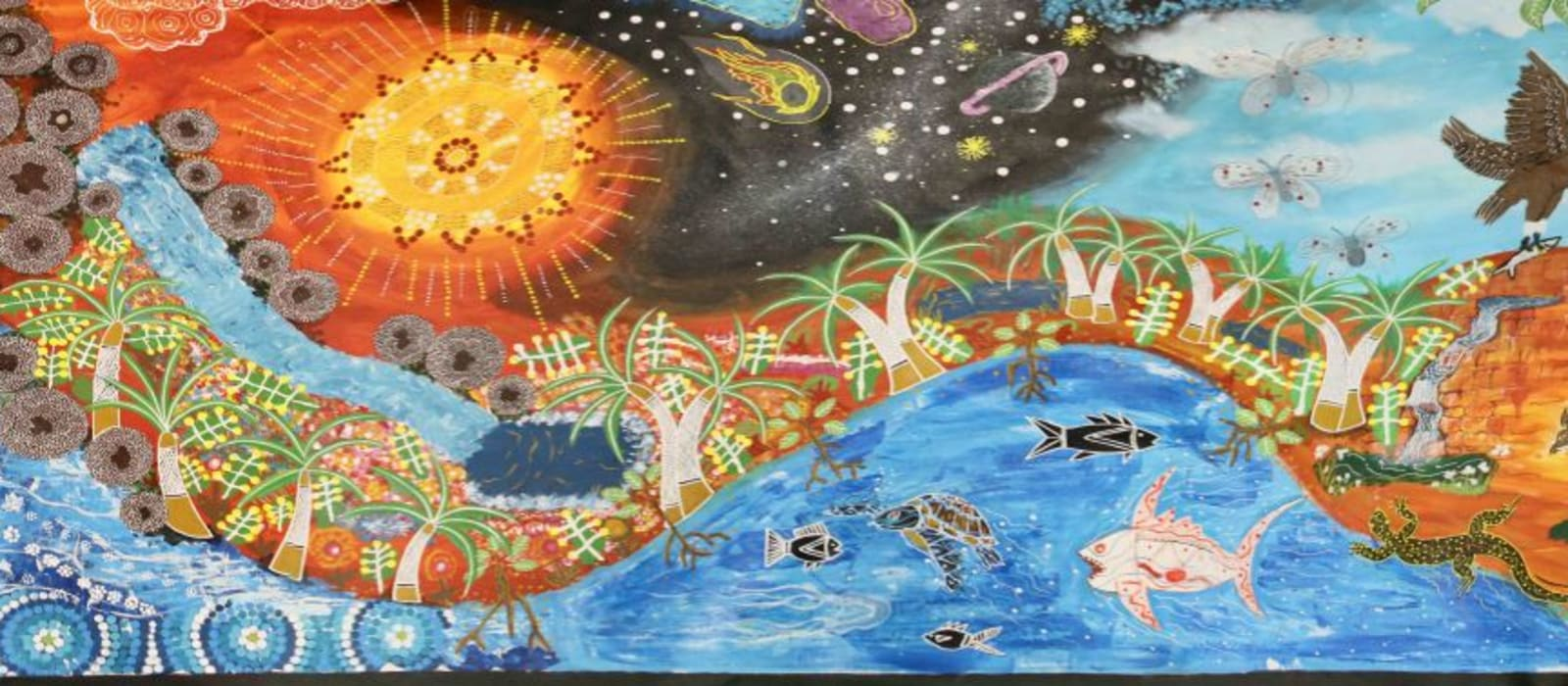
(“Creation Story” mural-Nungalinya College https://www.nungalinya.edu.au/creation-story)

Can one describe the feeling when they have created a work of art? Art, even something that reflects something sad or painful, can radiate beauty, sometimes enough to stop a person in their tracks. Art is subjective, appealing to some tastes more than others. Art, even something that presents as self-evident, has an aura of mystery about it. That is because, be it music, dance, literature, theatre or painting, the art has its origins in a creator, who are themselves a mystery. A part of the artist exists in the art. How is this possible? We humans seem to have a natural inclination for self-transcendence, or to seek some kind of spiritual connection beyond our senses. In the Christian tradition, our rituals reflect God’s creative power present to us. We are God’s creation, God’s works of art. Like the artist and the art, we reflect God’s image and likeness by our very existence. These days of the Triduum reflect great sacrifice and pain, but point the way to the joy of resurrection and rebirth that surpasses description.

 
You were created by the God of love
in God’s image and according to God’s likeness,
to be a unique expression of that love.
It is through you
that God desires to manifest Love
to the peoples of the world in these times,
and to offer them the freedom
of the children of God.
 – The Fundamental Principles of the Xaverian Brothers

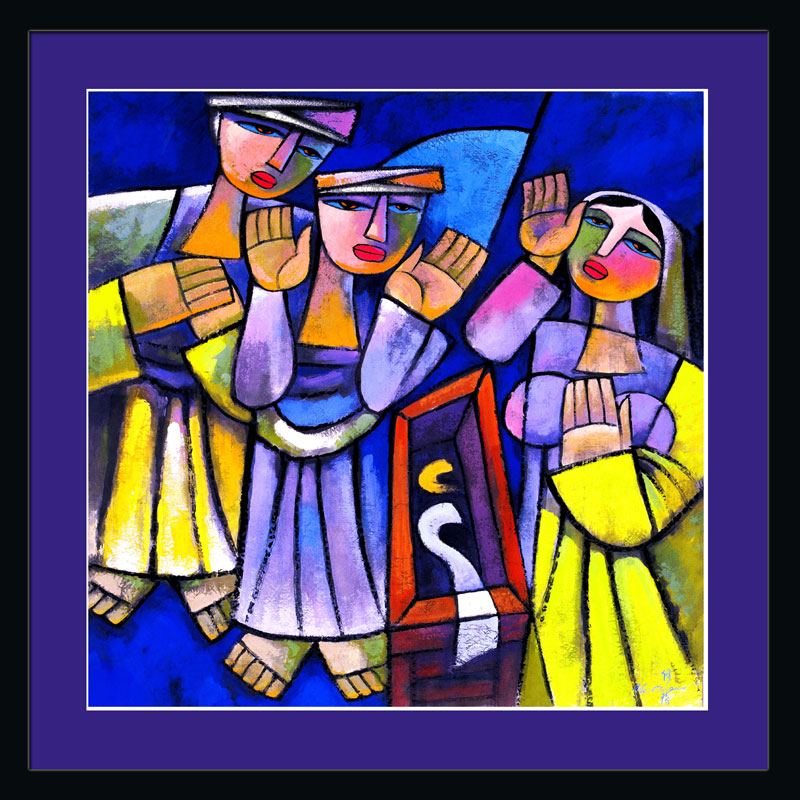
God, when we feel we are forsaken and in darkness, give us the hope in the dawn that lays ahead. Like the women at the tomb, may we believe in you even if we do not understand what we have witnessed. We trust that you point us towards the living, and welcome us as companions on this path to new and abundant life.

Amen

(“Women at the Tomb” by He Qi)

April 18-Good Friday of the Lord’s Passion

When Jesus had taken the wine, he said,
“It is finished.”
And bowing his head, he handed over the spirit.

John 19: 30

Here are the complete readings for Friday, April 18, 2025.

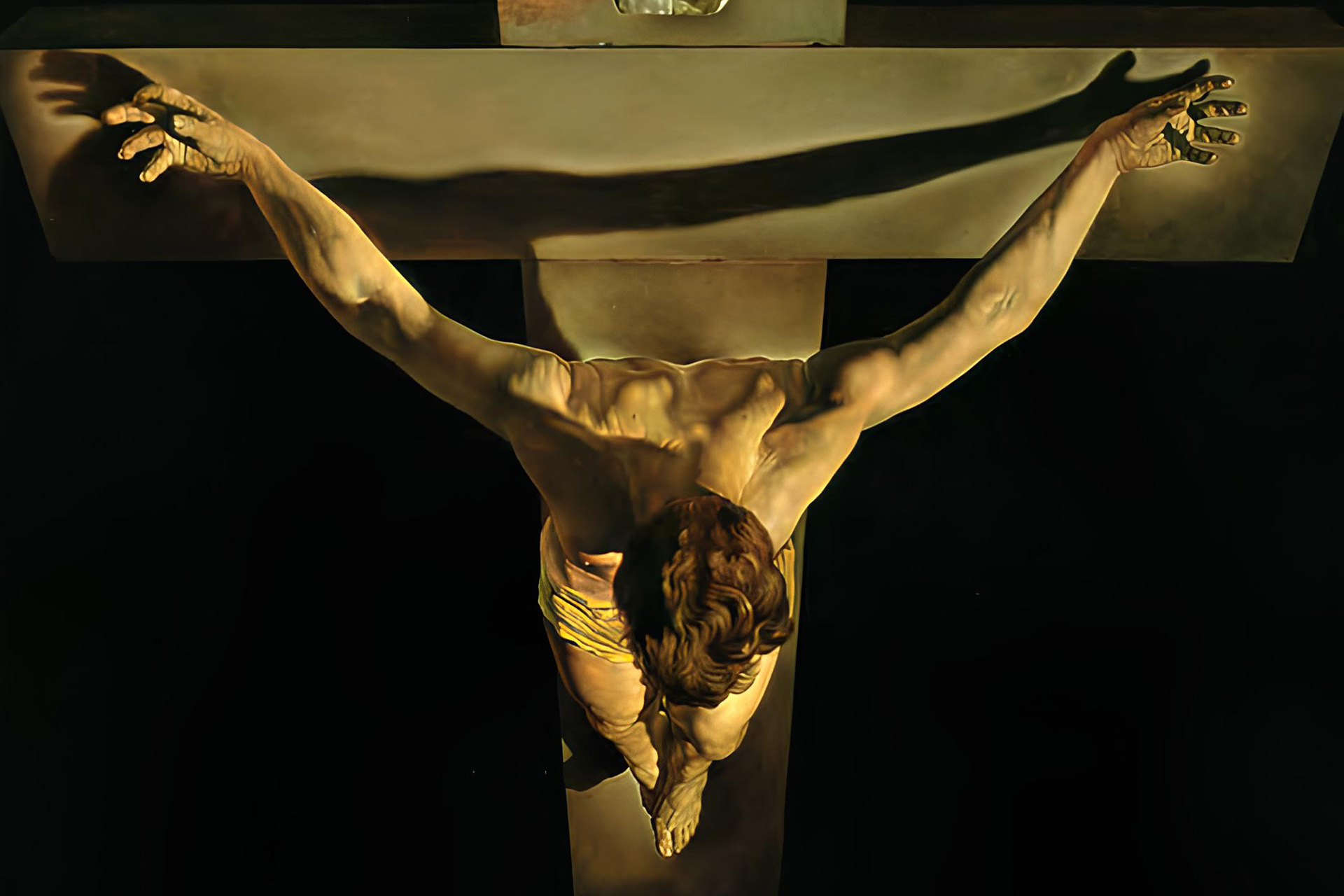
(“Christ of St. John of the Cross” by Salvador Dali)

Nothing special is achieved
without much labor, effort and zeal.
Remember,
Jesus, your brother,
has walked this path before you.
– The Fundamental Principles of the Xaverian Brothers

God, you gave your life for us. You guide so many others to be Christ to those they have never met. Give us this day to reflect on your love and your grace. Help us understand on this day, that is enough.

Amen

April 17-Holy Thursday and the Lord’s Supper

So when he had washed their feet
and put his garments back on and reclined at table again,
he said to them, “Do you realize what I have done for you?
You call me ‘teacher’ and ‘master,’  and rightly so, for indeed I am.
If I, therefore, the master and teacher, have washed your feet,
you ought to wash one another’s feet.
I have given you a model to follow,
so that as I have done for you, you should also do.”

John 13: 12-15

Here are the complete readings for Thursday, April 17, 2025.

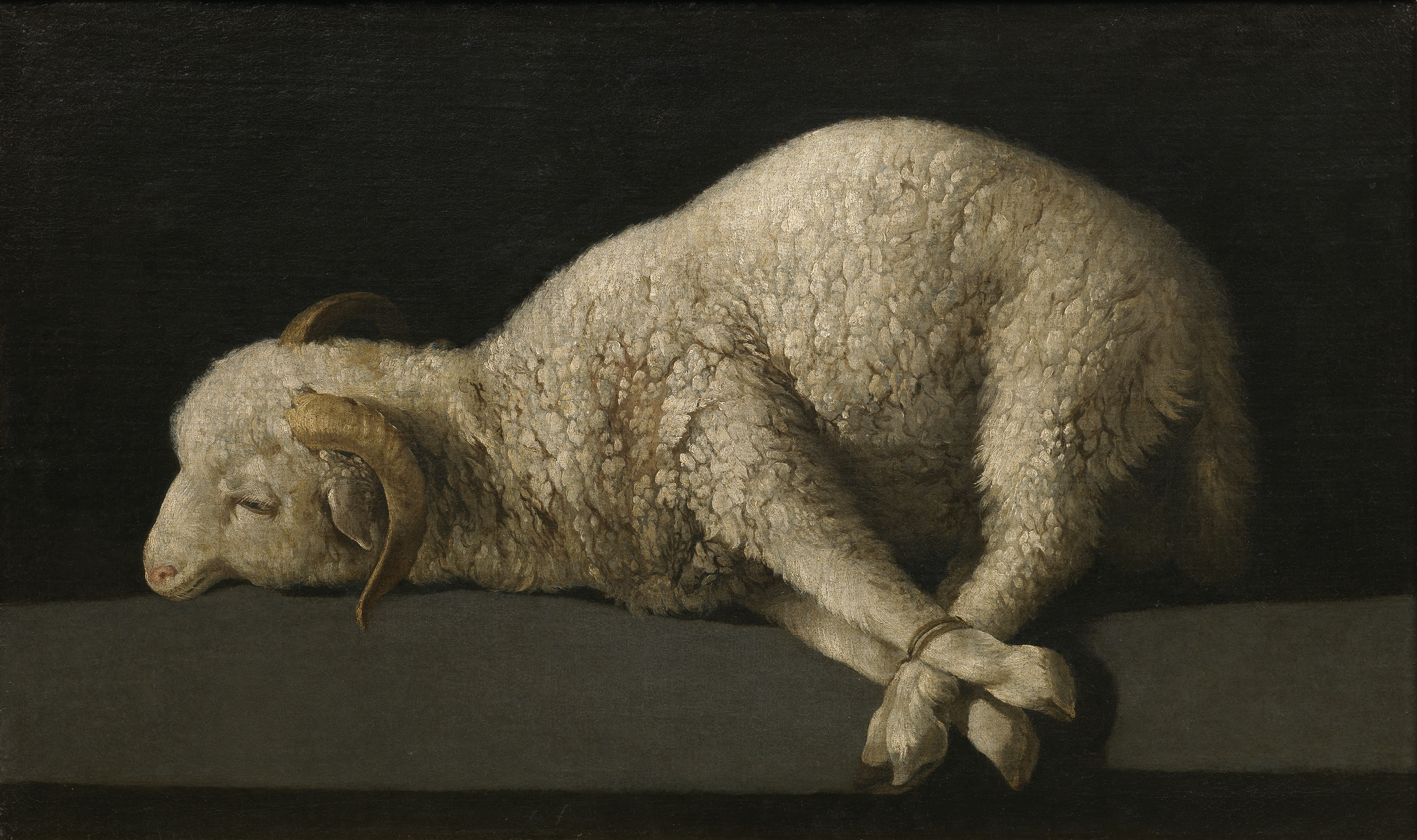
(“Agnus Dei” by Francisco Zurbaran)

Some memories can be dangerous memories. They could be memories of tragedies or humiliations, but not always. Can we recall the times in which we were invited to reorient our outlook or worldview, and accepted this invitation with all its consequences? The danger comes in the memory of the transformation that was disruptive to our previous place of comfort or familiarity. Surrendering like that is a radical choice and goes against our cultural norms about success and happiness. How do we recall these actions in a way that can change other people and aid in our continuing transformation? This is why rituals can be so powerful in any faith tradition or mission driven community. Rituals recall sacrifice, goodbyes, and loss, but they also signify rebirth and that the hope that this rebirth supplies. As we conduct such rituals, whether the Triduum or any other collective remembrance, let us pray that our minds and hearts are open and that we do not forget.

 
 Study and reflect also
upon the history of the congregation,
for this history
is the actual
lived
expression and development
of your Founder’s charism.
It will reveal to you
the mysterious ways of God
in the cycle of death and rebirth
that has been the life of the congregation.
– The Fundamental Principles of the Xaverian Brothers

God, thank you for the gift of our loved ones who have gone before us. May their acts of courage help us to love you and our neighbors. Help us remember this gift when we feel most alone. Give us the strength to receive your grace that calls us out of darkness and into new life and ways of being.

Amen

April 16-Wednesday of Holy Week

The Lord GOD has given me
a well-trained tongue,
That I might know how to speak to the weary
a word that will rouse them.
Morning after morning
he opens my ear that I may hear;
And I have not rebelled,
have not turned back.
I gave my back to those who beat me,
my cheeks to those who plucked my beard;
My face I did not shield
from buffets and spitting.

The Lord GOD is my help,
therefore I am not disgraced;
I have set my face like flint,
knowing that I shall not be put to shame.
He is near who upholds my right;
if anyone wishes to oppose me,
let us appear together.
Who disputes my right?
Let him confront me.
See, the Lord GOD is my help;
who will prove me wrong?

Isaiah 50: 4-9

Here are the complete readings for Wednesday, April 16, 2025.

(“Judas” by Stephanie Amos)

Throughout history Judas has been portrayed as a coward and an incarnation of evil. The name itself has become a vulgar adjective to this day. Other scholars have suggested that his motives, while not pure, were rooted in a desire to accelerate Jesus’ revolutionary vision. Judas saw Jesus as a way to overcome the oppression from the Roman Empire who occupied Palestine at that time. No one knows for sure why Judas betrayed Jesus. Regardless, his actions had devastating consequences, and Judas realized how deep his treachery cut as the Passion unfolded. How are we to process this story other than as a cautionary tale about knowing who your friends really are, or the ramifications of betrayal? Could we look at Judas’ character arc as a reflection about the need for humility and patience which can temper unbridled zeal? Could we also imagine this story as a thought experiment about just how far God’s forgiveness can reach? Would it be possible for even a hopeless sinner like Judas to have the chance to reflect and repent? We will never know of course, but we can use this narrative to meditate on our own acts of betrayal of others, small and great. Does the action strain or actually sever our relationships? Do we have the humility to recognize our poverty of spirit and look to make amends? Can we see the innate dignity in people who have hurt us, and remember their humanity whether they ask for forgiveness or not? When we go through Holy Week, we have the chance to experience the daily gift of forgiving grace as played out in public in a moment of history, when God and humanity intersect at the cross. Dare we doubt how and who even the worst of us can have the chance at some kind of redemption? Many years ago, the band U2 released a song called “Until the End of the World.” At the time I thought it was about a couple who had broken up over infidelity. I did not realize until I was older that the song is a fictionalized confession by Judas to Jesus. The title of the song comes from Jesus’ promise that he will always be with us, until the end of the world. How can we think otherwise?

Theodore James Ryken looked upon his original vocation
as being a conversion
through which he
fell in love
with the service of God.
Yet, he too,
came to the understanding
that a continual conversion is needed.
Be patient, therefore, with yourself and with Go
d. – The Fundamental Principles of the Xaverian Brothers

God, you have redeemed us through the life and death of Jesus. Give us the confidence to speak to those who have been forgotten, and to the people who have forgotten them. Thank you for showing us that while grace does not come cheaply, it is always available and offered freely. Give us the mind and heart to believe that our mission on earth is always growing and changing, which helps us to follow Christ and be Christ in this world.

Amen

April 15-Tuesday of Holy Week

Simon Peter said to him, “Master, where are you going?”
Jesus answered him,
“Where I am going, you cannot follow me now,
though you will follow later.”

John 13:36

Here are the complete readings for Tuesday, April 15, 2025.

(“Saint John” Our Mother of Africa Chapel-Basilica of the Shrine of the Immaculate Conception)

These readings during Holy Week remind me of the folly of self-centered expectations, especially when we try to justify having the feelings at all. We want our life’s narratives to be linear, and on an upward or tangibly rewarding trend, because we believe we deserve it. For me professionally, the narrative took its own special path. Like most schools, our high school annually honors a staff member with a “teacher/staff member of the year” award. Like everyone else, each year I hoped that my name would be called at the schoolwide ceremony (anyone who says they don’t care is lying). My mind took on a well crafted narrative about what would happen. I knew what I would be wearing, when I would see my wife, parents and children emerging from the crowd to greet me, and the hugs and hi-fives from my colleagues while the students stood in applause. It didn’t happen. As time marched on, I grew more impatient and disappointed. Years passed. My kids grew older and busier. My dad died. Then, after 19 years, my name was called! What made this day special was not just the honor itself but the way the ceremony transpired. You see, this award was bestowed on me in 2020, during the COVID pandemic. I found out about it alone in my office, watching my principal speak about me on a livestream video broadcast. I emerged, wearing a mask, and there was my wife to greet me. That was not at all how I thought that this moment would occur, but I was grateful for the good Lord’s sense of humor. It was a much needed lesson in humility and gratitude and a moment of grace. This reflection isn’t some reminder about everything happening for a reason. For me, Holy Week is a reminder about the presence of the Beloved in uncertain or perilous moments and our awareness of how much greater this presence is compared to what we think we need to make us fulfilled.

 It is this communion with the living God
which is at the heart of your life
as a child of God,
disciple of Jesus,
witness of God’s spirit,
quickened member of God’s Body,
and brother or sister to the world.
– The Fundamental Principles of the Xaverian Brothers

God, when we are unsettled or disappointed, help us to understand not so much what has happened but why we are disappointed. May we recognize our own brokenness in being attached to what will inevitably vanish from our eyes and slip from our grasp. Your ways seem unclear and mysterious to us. Help us accept this mystery as a type of grace that fosters hope and trust in your kingdom, on earth as it is in heaven.

Amen