Empathy is hard to teach

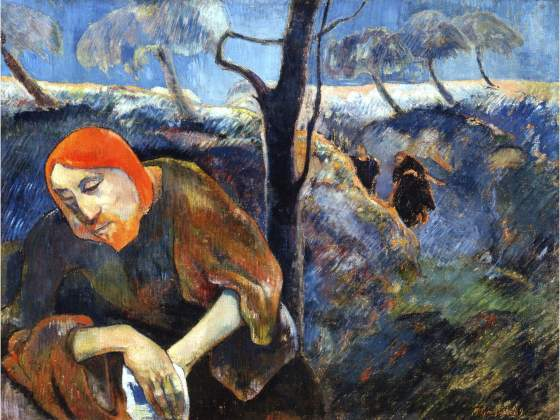
As we begin the liturgical season of Ordinary Time in the Christian tradition, we are invited to reflect on the daily readings. For this first week of the season, the first readings come from an unknown author directed at the somewhat ambiguous audience in early Christianity known as “the Hebrews.” The Gospel readings during Ordinary Time are focused on Jesus and his actions and words, but mostly his actions, in the Gospel of Mark. Please consider writing your own responses to the reflection questions below, or to reply to other peoples’ contributions. (painting below by Paul Gauguin)
Here are the readings for January 15, 2025 from the Letter to the Hebrews and from the Gospel of Mark.

  1. What do you believe that the author of the book of Hebrews is saying to the audience about the simple but difficult dispositions Christians should have in their interactions with other people and with the world?
  2. In Mark, Jesus’ disciples do not understand why he left the crowd to be alone and pray. Consider when you have the opportunity to do as Jesus did, for however short a time, but choose not to and revert to a familiar pattern or behavior. How can you break this cycle of inertia?

Read page 5 of the Fundamental Principles of the Xaverian Brothers.

How does the author of the Fundamental Principles emphasize the dispositions and practices of Jesus from the previous readings, and how does the author encourage us to persevere in being countercultural?

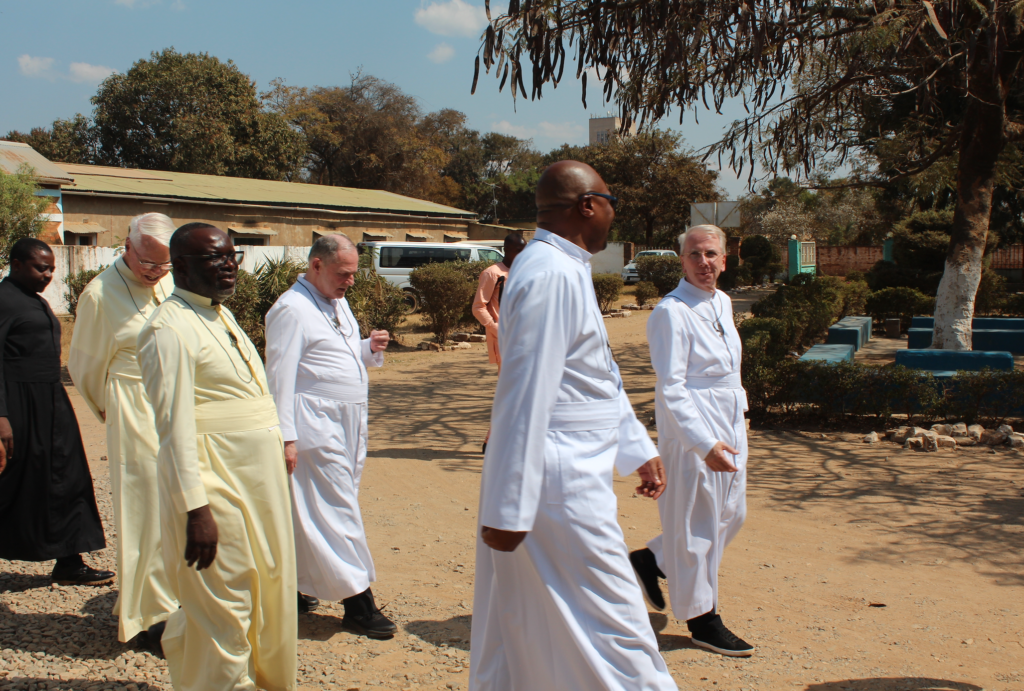
Above photo of Br. Harry Eccles, CFX and Br. Richard Mazza, CFX at the Sant in Haiti.

A Healing Sabbath

As we begin the liturgical season of Ordinary Time in the Christian tradition, we are invited to reflect on the daily readings. For this first week of the season, the first readings come from an unknown author directed at the somewhat ambiguous audience in early Christianity known as “the Hebrews.” The Gospel readings during Ordinary Time are focused on Jesus and his actions and words, but mostly his actions, in the Gospel of Mark. Please consider writing your own responses to the reflection questions below, or to reply to other peoples’ contributions. (Below: Eleventh century fresco of the Exorcism at the Synagogue in Capernaum)

Here are the readings for January 14, 2025 from the Letter to the Hebrews and from the Gospel of Mark.

  1. When Jesus drives out the unclean spirit, why does he command the spirit to be quiet, rather than seizing the opportunity for the people to learn more about his identity?
  2. Jesus taught and healed on the sabbath, the day of rest. The purpose of the sabbath is not just about disconnecting, but about reconnecting. Reconnecting can take energy on a day of rest. How can you be mindful of the balance between disconnection and reconnection and put it into practice on a day-long or hour-long sabbath?

Read pages 3 and 4 of the Fundamental Principles of the Xaverian Brothers.

On page 3 of the Fundamental Principles, the author states that “at times you will discover that God’s ways are not your ways, and God’s thoughts are not your thoughts. When this happens, try to surrender yourself trustingly into the arms of your Parent God.” At what times in your life have you made this discovery (good, peaceful, stressful, grief-stricken, angry, relaxed) and how have you responded as a kind of “surrender?”

(Photo of Xaverian Brothers gathering in Congo https://xaverianbrothers.org/2022/09/12/a-visit-to-congo/)

Of Angels and Boredom

As we begin the liturgical season of Ordinary Time in the Christian tradition, we are invited to reflect on the daily readings. For this first week of the season, the first readings come from an unknown author directed at the somewhat ambiguous audience in early Christianity known as “the Hebrews.” The Gospel readings during Ordinary Time are focused on Jesus and his actions and words, but mostly his actions, in the Gospel of Mark. Please consider writing your own responses to the reflection questions below, or to reply to other peoples’ contributions.

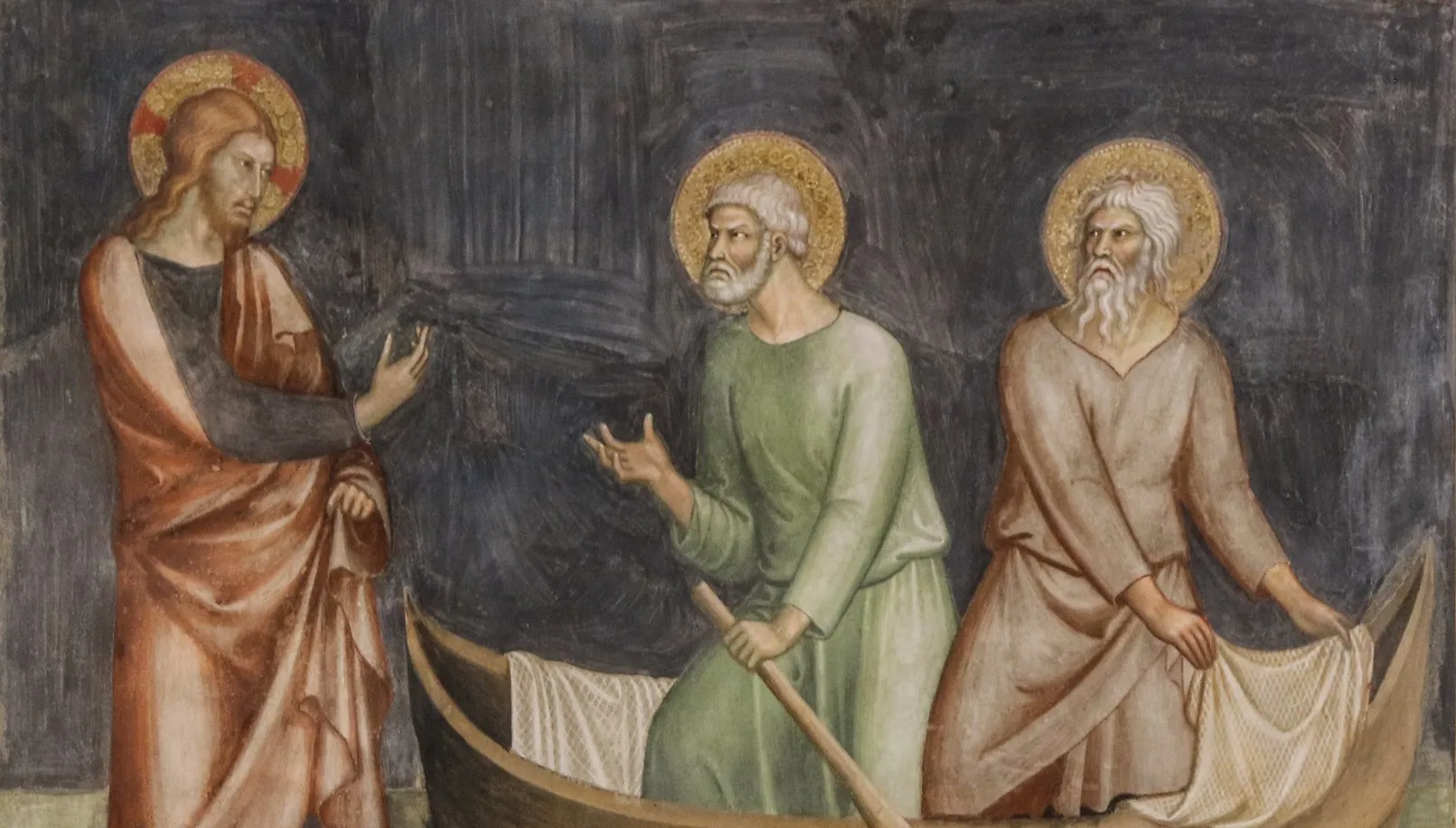
Today, consider the readings for Monday, January 13, 2025 from the Letter to the Hebrews and from the Gospel of Mark. (fresco below by Masaccio)

  1. In the letter to the Hebrews, why is the author comparing Jesus to angels? What is the author trying to say not only about Jesus but about human beings and our own worth?
  2. From the Gospel of Mark, a potential hot take-did Peter, Andrew, James and John follow Jesus in part because they were bored and were sick and tired of smelling like old fish and brine? Is there anything wrong with that, or with making positive choices that begin from less than selfless motives?

Next, read the first two pages of the Fundamental Principles of the Xaverian Brothers.

The author writes about the concept of freedom. How might God’s conception of our freedom differ from our own notions of being free in daily life?