March 12-Wednesday of the First Week of Lent

At the judgment the men of Nineveh will arise with this generation
and condemn it,
because at the preaching of Jonah they repented,
and there is something greater than Jonah here.”

Luke 11: 31-32

Here are the complete readings for Wednesday, March 12, 2025

(“The Sign of Jonah” Icon from orthodox_icons)

Jonah was lucky. The only real sign for us is the reality of our own mortality. With that in mind, how shall we best use the days in front of us now, starting with where we are today? In other words, how do we differentiate between what is within our control and what is not, and then be at peace with our choices? At the end of the day, can we better judge as to whether the day was good or bad? What changes did we make? What acts of courage took place? Did we recognize instances of weakness or disengagement? Did we make amends for a moral failing, or give thanks for an unexpected grace? Hopefully, at the end of the day we can give thanks that we are continuing a journey of becoming more like whom we really are.

Ryken looked upon his original vocation
as being a conversion
through which he
fell in love
with the service of God.
Yet, he too,
came to the understanding
that a continual conversion is needed.
Be patient, therefore, with yourself and with God.
– The Fundamental Principles of the Xaverian Brothers

God, teach me to understand what I do not know. Give me the questions to ask and the courage to ask them. Remind me that each day is different, but always filled with your presence and your grace. Thank you for the opportunity to change so I may be more of the person you intend me to be.

Amen
Joy and Storm Clouds

As we begin the fourth week of Ordinary Time, the readings continue to reflect the themes of encouragement to faith communities and challenges to embrace what is new so that we may maintain what is sacred. Please consider writing your own responses to the readings or reflection questions below, or to reply to other peoples’ contributions. Also, if you know of a person, either religious or lay person, who has modeled the Xaverian way, and wish to share their story, please feel free to add to the comments section. 

Images of crucibles and foreshadowing of crucifixions permeate today’s readings from the book of Malachi and Gospel of Luke. These are sobering messages but hopefully not foreboding. Christianity, and the spiritual life in general, are not about glorifying suffering or masochism. Rather, just as Mary carried the sorrowful mysteries with her, the more attentive we are to our present realities, including times of dull or acute pain, the easier it is to accept moments of grace and happiness. What can help us in this journey is a commitment to the present tense with contemplative practices, even simple ones, that can put our lived experience into greater focus. Consider the very active life of Br. Philip Neri Crossen (bio below) that was animated by his commitment to stillness in prayer. This week, continue to reflect on the gentle and sometimes urgent prompting and encouragement in the letter to the Hebrews to follow the ways of Jesus, even when the path forward is not clear. Note also the patterns of activity that Jesus establishes for himself and his friends in the Gospel of Mark, and the tensions that his choices cause among even with people who admire him and his ministry. Like Jesus, may we own these uncomfortable moments with others as a part of revealing who we truly are meant to be, rather than to seem in appearance.

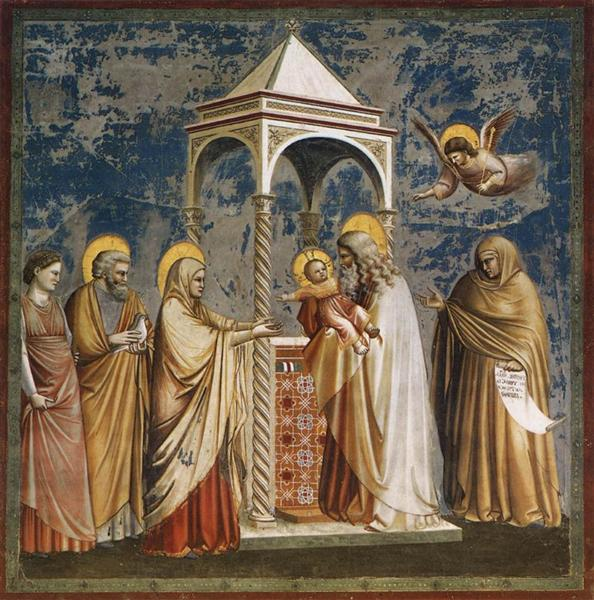
(Fresco below “Presentation of Christ in the Temple” by Giotto)

Here are the readings for Saturday, February 1 from the Book of Malachi, the Letter to the Hebrews, and the Gospel of Luke.

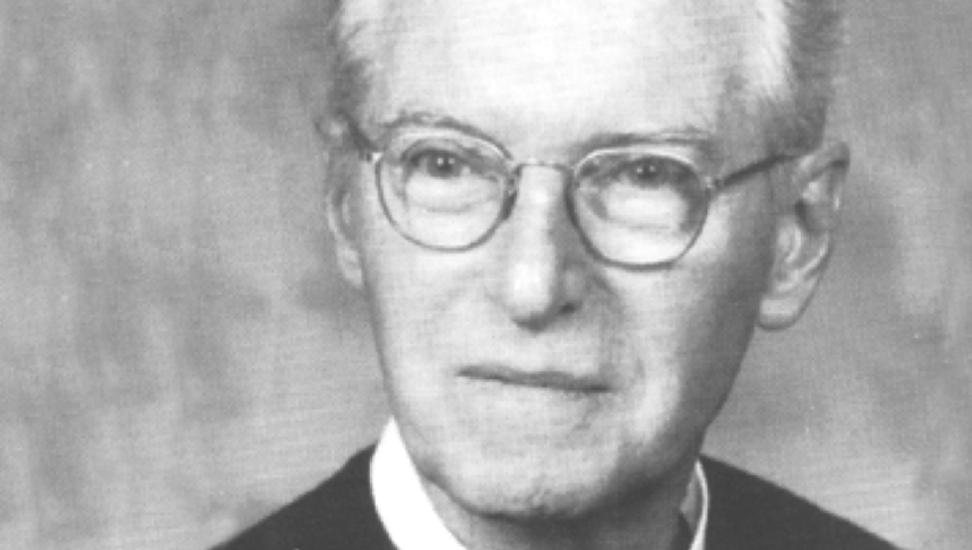
(Above photo of Brother Philip Neri Crossen, CFX-Xaverian Brothers)

  1. Read the appreciation of Br. Philip Neri Crossen by Br. Thomas Ryan. Note the details of Br. Philip’s daily routine and the intentionality of his commitments large and small.
  2. Reflect on the interactions of Mary with Simeon and Anna. How do their omens and warnings fit into a moment that is meant to be both a rite of passage and celebration of life? Remember, the Gospel literally means “Good news!” How can this inform us in our interactions with people we truly love in very active and selfless ways?

Return and Rejoice

(Painting below “Nehemiah at the Walls of Jerusalem” by Paul Gustave Dore)

As we come to the end of the second week of Ordinary Time, the readings shift to two homecomings: Nehemiah and the Israelites as they begin to rebuild the temple in Jerusalem, and Jesus returning from his time in the desert to the synagogue in his hometown of Nazareth. Both moments are emotional, as they conjure up memories of the comfort of the past. But Nehemiah and Jesus look at their people squarely and reveal to them what they may not be ready to hear-it is time to build something new. Today we also feature the life of the extraordinary Brother Arcadius Alkonis, who answered a call to join the Xaverian Brothers, take on leadership positions in schools, and then, to build something new. In his case, it was to teach and serve in multiple schools in Kenya.

In this third week in Ordinary Time, we continue to encounter the encouragement from the Letter to the Hebrews and dare to keep up on Jesus’ rapid but intentional journey through the Gospel of Mark.

Please consider writing your own responses to the readings or reflection questions below, or to reply to other peoples’ contributions. Also, if you know of a person, either religious or lay person, who has modeled the Xaverian way as Brother Arcadius did, and wish to share their story, please feel free to add to the comments section. 

Here are the readings for Sunday, January 26 from the Book of Nehemiah the Gospel of Mark.

Read Brother Ed Driscoll’s tribute to Brother Arcadius Alkonis.

(photo of Brother Arcadius Alkonis, CFX-Xaverian Brothers)

  1. After reading the tribute to Br. Arcadius, it is easy to marvel at the scope of his career and ministry just in terms of the places he traveled! However, Br. Ed Driscoll claims that “…in his own unique way, Arcadius embodied the Xaverian Charism as no one else can.” How does “embodying the charism” make a person’s life so much more than the sum of one’s achievements?
  2. The themes in this week’s readings are about the actual grace in answering a call from God, and navigating the pushback from well meaning people who struggle to accept that traditions must change in order to reflect the holiness that created them in the first place. Today, the tension between preserving the past and exploring the future is very real in spiritual communities. This tension can be healthy if all parties are open to dialogue. What is dialogue, and how is it different than mere agreement or consensus?