Vulnerability or Shame?

During the fifth week in Ordinary Time, first readings shift to the creation stories in Genesis, while the Gospel readings continue to follow the actions, prayerful pauses, and corrections performed by Jesus in the Gospel of Mark. These readings reflect on God’s love in action, specifically creation, and how these creative powers establish connections with us, made in God’s image. Conversely, the Scripture confirms our all too human tendency to disconnect from God and our truest selves. Yet God continues to reach out and be right in our midst, gently calling us to turn around and embrace what is real and holy.

Think about when you have really messed something up. Was it handled quietly or did you find yourself exposed, there alone to face your shame? Similarly, have you ever been in a difficult situation in which you really needed help, but were afraid to ask? How can we be open to the discomfort of being vulnerable so that we can be free from the burdens of shame?

Here are the readings for Friday, February 14 from the Book of Genesis and from the Gospel of Mark.

(Painting above of “Adam and Eve” by Marc Chagall)

Read “A Description of the Xaverian Charism as Lived by Collaborators.”

Read the appreciation of Brother David Eddy, CFX.

(Above photo of Brother David Eddy, CFX-Xaverian Brothers)

  1. How do we better “mutually help, encourage, and edify” one another? What kind of awareness do we need to possess to succeed in this task?
  2. How can we best use the spaces in our day, including the dull or boring parts, to seek this kind of awareness?
  3. It is often said that the “devil is in the details,” meaning if one doesn’t pay attention to the little things a great plan can go awry. Where have you seen or heard about an action in which the attention to details were made sacred?
  4. How does the story of Br. David Eddy’s life demonstrate how we cannot measure the impact of a person’s vocation based on fame or recognition?

Please consider writing your own responses to the readings or reflection questions below, or to reply to other peoples’ contributions. Also, if you know of a person, either religious or lay person, who has modeled the Xaverian way, and wish to share their story, please feel free to add to the comments section. 

All that is Pleasing

During the fourth week of Ordinary Time, the readings continue to reflect the themes of encouragement to faith communities and challenges to embrace what is new so that we may maintain what is sacred. Being open to the presence of God in uncertain times figure prominently. Please consider writing your own responses to the readings or reflection questions below, or to reply to other peoples’ contributions. Also, if you know of a person, either religious or lay person, who has modeled the Xaverian way, and wish to share their story, please feel free to add to the comments section. 

Today is the final reading from the Letter to the Hebrews this cycle in Ordinary Time. The author reminds the community that grace can be found through ordinary sacrifices such as sharing with their neighbors and accepting the decisions of those tasked with leadership. In the Gospel of Mark, Jesus, despite fatigue, opens himself up to be present to the people who are aimless or lost. His disciples still do not fully grasp that this type of “agape” or self-sacrificing love in daily life has a compounding graced effect not only on those who are being served but also on the servant.

(Painting below of “Christ’s Entry into Brussels” by James Ensor)

Here are the readings for Saturday, February 8 from the Letter to the Hebrews and the Gospel of Mark.

Reflect on page 11 of the Fundamental Principles of the Xaverian Brothers.

  1. Read the Gospel and then read the section from the Fundamental Principles. What do you find challenging, frightening, or inspiring?
  2. How do the words of the Fundamental Principles reflect the words of encouragement in the Letter to the Hebrews?
  3. Read the reflection on St. Mary’s Industrial School and the appreciation for Brother Thomas More Page, CFX. What gifts did he receive from his experiences at this school and how did he share the gifts as a man, as a Xaverian Brother, as a child of God?

(Above photo of Brother Thomas More Page, CFX-St. Xavier High School)

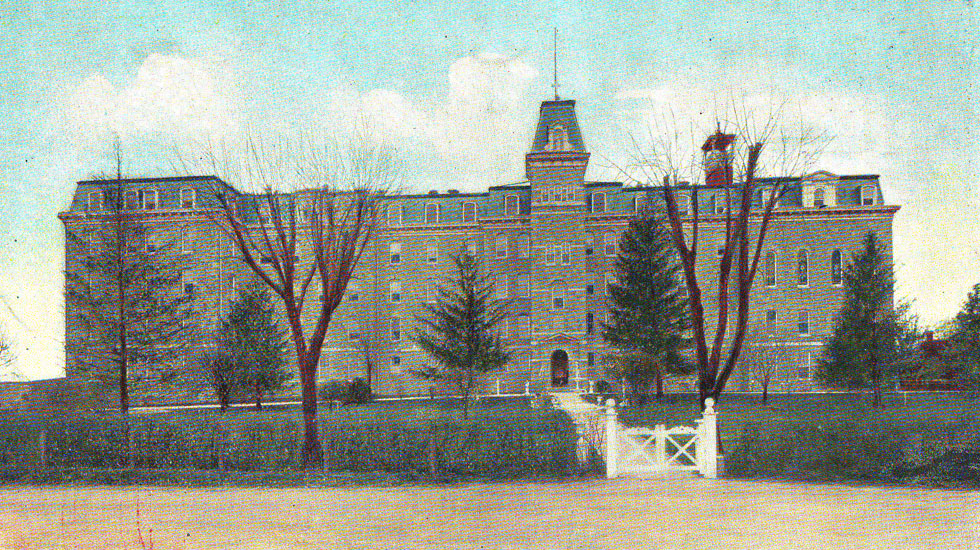
(Photo above of St. Mary’s Industrial School, Baltimore, MD-Xavierian Brothers)

Trust Me I Am Here

In this third week of Ordinary Time, the readings continue to reflect the themes of encouragement to faith communities and challenges to embrace what is new so that we may maintain what is sacred. Please consider writing your own responses to the readings or reflection questions below, or to reply to other peoples’ contributions. Also, if you know of a person, either religious or lay person, who has modeled the Xaverian way, and wish to share their story, please feel free to add to the comments section. 
The Xaverian Charism calls us to fall in love with God each day. On some days this is quite natural, and extremely difficult on others. I suspect for those of us who pursue a spiritual journey, most days fall somewhat on a continuum between the two extremes. Motivation for stepping into the unknown may be in short supply on any given ordinary day. This is where grace comes in. People who follow the Xaverian way are empowered by five values which help us bear witness to the Charism. The values are: Simplicity, Compassion, Humility, Zeal, and Trust. The values do not exist in isolation and together gives us and our communities a beacon, especially when we are reluctant or fearful. As you read today’s Scriptures and the profile of Brother Raymond Hoyt, CFX, think about the value of Trust and its power to animate us, even on the most ordinary of days. (Painting below “Jesus Lamp Under a Bushel”)

Here are the readings for Thursday, January 30 from the Letter to the Hebrews and from the Gospel of Mark.

Next, read and reflect upon pages 2 and 3 the Fundamental Principles of the Xaverian Brothers.

(Above photo of Brother Raymond Hoyt, CFX)

  1. Read the passage from the Letter to the Hebrews and pages 2 and 3 from the Fundamental Principles together. How do the words and messages in the Fundamental Principles reflect what is revealed in the Scripture, especially about the value of Trust?
  2. Why is Trust so essential to following through on Jesus’ command to not to hide one’s “lamp” or inner light, as well as his admonition about the effects of unconditional giving of self?
  3. Read the text and view the video on the life of Br. Raymond Hoyt, CFX. How did he reflect the Xaverian Charism in daily life, especially witnessing to the value of Trust?