Return and Rejoice

(Painting below “Nehemiah at the Walls of Jerusalem” by Paul Gustave Dore)

As we come to the end of the second week of Ordinary Time, the readings shift to two homecomings: Nehemiah and the Israelites as they begin to rebuild the temple in Jerusalem, and Jesus returning from his time in the desert to the synagogue in his hometown of Nazareth. Both moments are emotional, as they conjure up memories of the comfort of the past. But Nehemiah and Jesus look at their people squarely and reveal to them what they may not be ready to hear-it is time to build something new. Today we also feature the life of the extraordinary Brother Arcadius Alkonis, who answered a call to join the Xaverian Brothers, take on leadership positions in schools, and then, to build something new. In his case, it was to teach and serve in multiple schools in Kenya.

In this third week in Ordinary Time, we continue to encounter the encouragement from the Letter to the Hebrews and dare to keep up on Jesus’ rapid but intentional journey through the Gospel of Mark.

Please consider writing your own responses to the readings or reflection questions below, or to reply to other peoples’ contributions. Also, if you know of a person, either religious or lay person, who has modeled the Xaverian way as Brother Arcadius did, and wish to share their story, please feel free to add to the comments section. 

Here are the readings for Sunday, January 26 from the Book of Nehemiah the Gospel of Mark.

Read Brother Ed Driscoll’s tribute to Brother Arcadius Alkonis.

(photo of Brother Arcadius Alkonis, CFX-Xaverian Brothers)

  1. After reading the tribute to Br. Arcadius, it is easy to marvel at the scope of his career and ministry just in terms of the places he traveled! However, Br. Ed Driscoll claims that “…in his own unique way, Arcadius embodied the Xaverian Charism as no one else can.” How does “embodying the charism” make a person’s life so much more than the sum of one’s achievements?
  2. The themes in this week’s readings are about the actual grace in answering a call from God, and navigating the pushback from well meaning people who struggle to accept that traditions must change in order to reflect the holiness that created them in the first place. Today, the tension between preserving the past and exploring the future is very real in spiritual communities. This tension can be healthy if all parties are open to dialogue. What is dialogue, and how is it different than mere agreement or consensus?
Deus Ex Machina

For the second week of the season, the first readings continue to come from an unknown author directed at the somewhat ambiguous audience in early Christianity known as “the Hebrews.” The Gospel readings during Ordinary Time are focused on Jesus and his actions and words, but mostly his actions, in the Gospel of Mark. There is also a reflection question based on documents from the Xaverian Brothers or from accounts of the lives of Xaverian Brothers or lay Partners in Mission. Please consider writing your own responses to the reflection questions below, or to reply to other peoples’ contributions. Also, if you know of a person, either religious or lay person, who has modeled the Xaverian way, and wish to share their story, please feel free to add to the comments section.

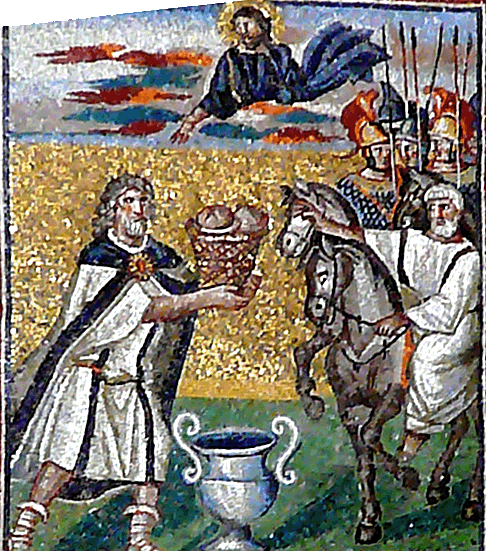
Here are the readings for Wednesday, January 22 from the Letter to the Hebrews and from the Gospel of Mark. (“The Sacrifice of Melchizedek” mosaic below from Santa Maria Maggiore)

Melchizedek is a mysterious figure, described as a priest, who appears suddenly to greet Abraham upon Abraham’s return from war. Melchizedek is described as a priest who offers bread and wine to the returning warriors as a symbol of blessing and more importantly, of peace. He arrives just at the right time to remind Abraham of that working for connection and peace through fidelity to a covenant can be more difficult than leaping into battle. Melchizedek represents a moment of grace in a time of chaos, which the author to the Hebrews recalls in proclaiming the person of Jesus Christ. Think about your own past week in Ordinary Time. When have you had the presence to intercede, however briefly, to remind yourself or others to create space for awareness amidst the chaos that life can bring?

Read page 11 of the Fundamental Principles of the Xaverian Brothers

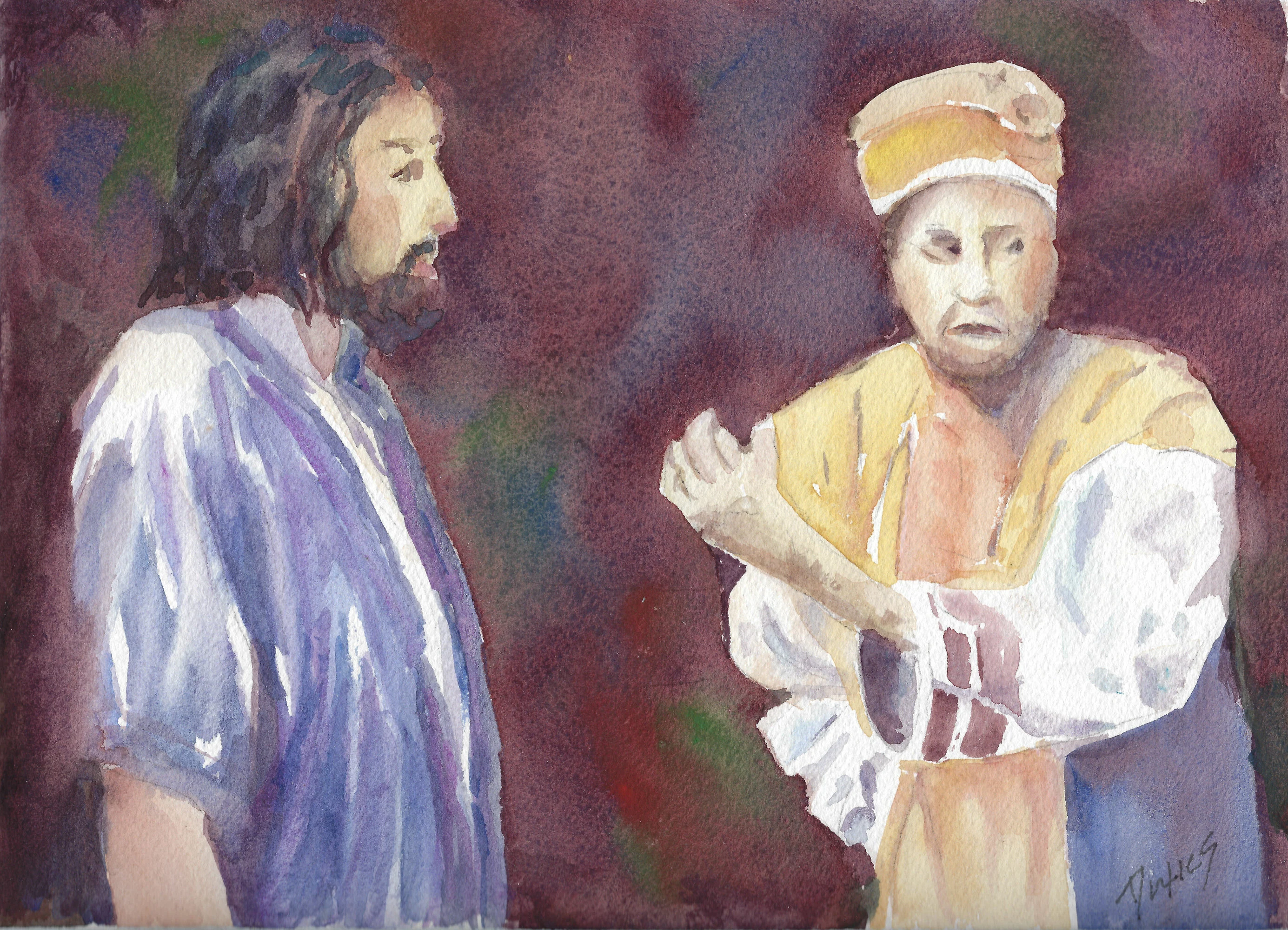
(Above “Jesus heals the man with the withered hand” Dixie Stoddard Art)

In Mark, Jesus heals another man. Again, his adversaries are upset because the action does not fit to the established social structure or norms at the time. Why is such a big deal for the Pharisees? Because order and familiarity provide comfort, even if the situation is not altogether healthy for all involved. As a result, the Pharisees turn from spewing invective to actually plotting violence. Now read in light of the section on page 11 of the Fundamental Principles on those who are estranged from their own uniqueness. How do we approach, and perhaps confront, people who say or do hurtful things, while recognizing the place of pain or estrangement at the root cause of this behavior? How does a Xaverian missionary shine light on this darkness?