
For the second week of the season, the first readings continue to come from an unknown author directed at the somewhat ambiguous audience in early Christianity known as “the Hebrews.” The Gospel readings during Ordinary Time are focused on Jesus and his actions and words, but mostly his actions, in the Gospel of Mark. There is also a reflection question based on documents from the Xaverian Brothers or from accounts of the lives of Xaverian Brothers or lay Partners in Mission. Please consider writing your own responses to the reflection questions below, or to reply to other peoples’ contributions. Also, if you know of a person, either religious or lay person, who has modeled the Xaverian way, and wish to share their story, please feel free to add to the comments section.
Here are the readings for Wednesday, January 22 from the Letter to the Hebrews and from the Gospel of Mark. (“The Sacrifice of Melchizedek” mosaic below from Santa Maria Maggiore)
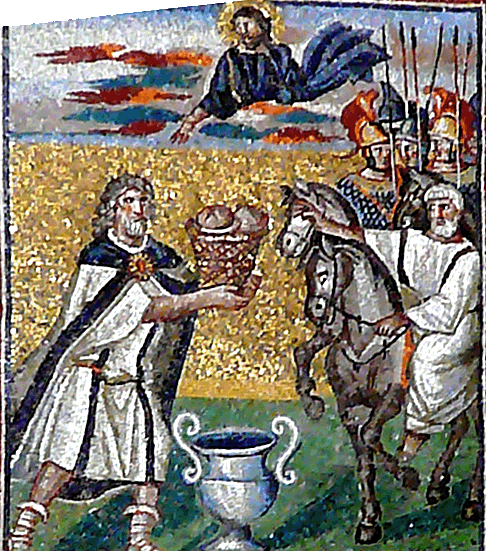
Melchizedek is a mysterious figure, described as a priest, who appears suddenly to greet Abraham upon Abraham’s return from war. Melchizedek is described as a priest who offers bread and wine to the returning warriors as a symbol of blessing and more importantly, of peace. He arrives just at the right time to remind Abraham of that working for connection and peace through fidelity to a covenant can be more difficult than leaping into battle. Melchizedek represents a moment of grace in a time of chaos, which the author to the Hebrews recalls in proclaiming the person of Jesus Christ. Think about your own past week in Ordinary Time. When have you had the presence to intercede, however briefly, to remind yourself or others to create space for awareness amidst the chaos that life can bring?
Read page 11 of the Fundamental Principles of the Xaverian Brothers
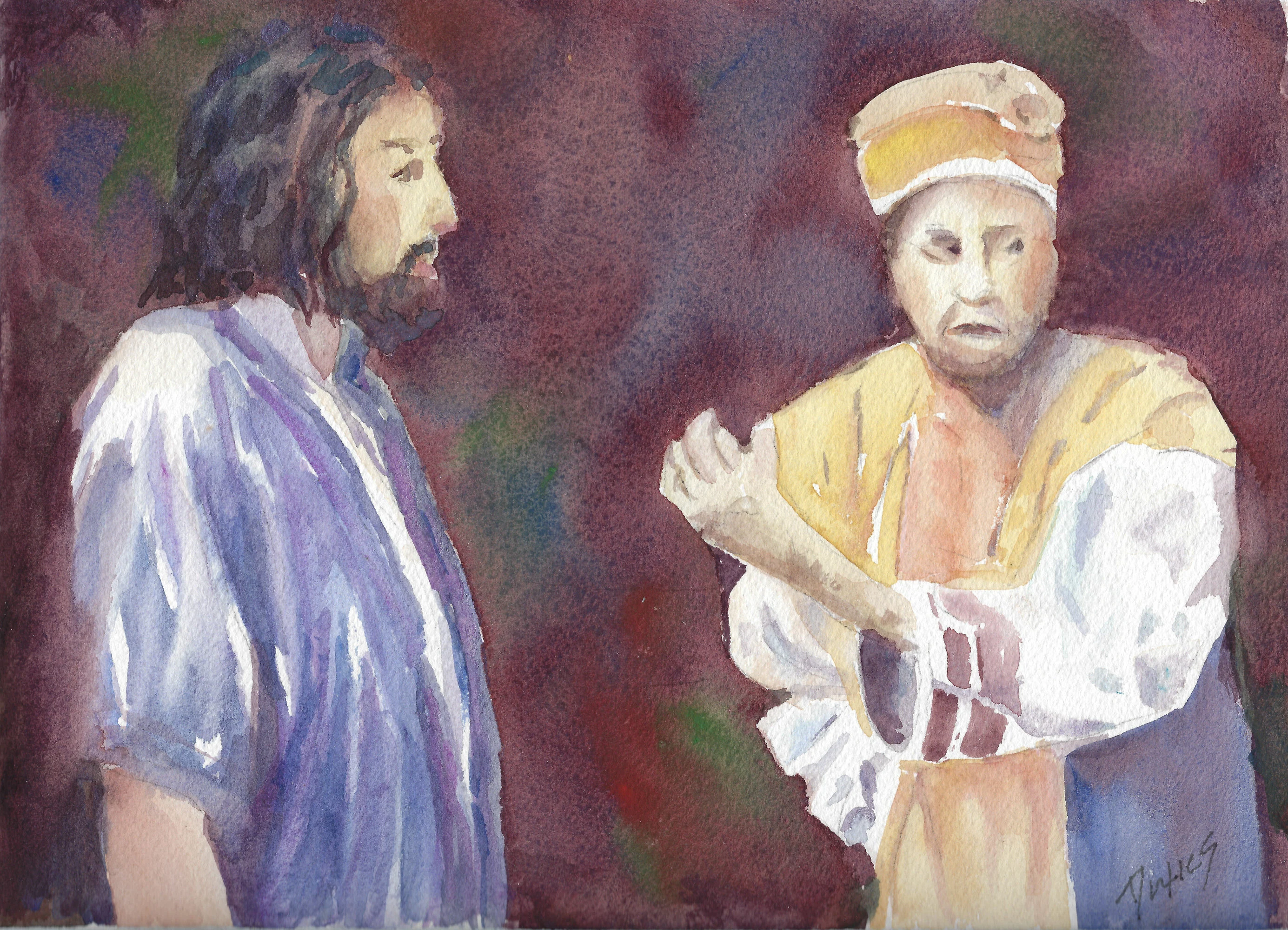
(Above “Jesus heals the man with the withered hand” Dixie Stoddard Art)
In Mark, Jesus heals another man. Again, his adversaries are upset because the action does not fit to the established social structure or norms at the time. Why is such a big deal for the Pharisees? Because order and familiarity provide comfort, even if the situation is not altogether healthy for all involved. As a result, the Pharisees turn from spewing invective to actually plotting violence. Now read in light of the section on page 11 of the Fundamental Principles on those who are estranged from their own uniqueness. How do we approach, and perhaps confront, people who say or do hurtful things, while recognizing the place of pain or estrangement at the root cause of this behavior? How does a Xaverian missionary shine light on this darkness?
 Ordinary and Unspectacular in the Liturgical Year
I have found that gratitude is a force that can hold back the creeping in of sin and chaos. Practicing gratitude and thanking God during difficult moments or when I see gifts in others is a valuable practice. It leads me to become less like the Pharisees who grumble at good, and I can rejoice in how God gives good gifts to others as well as provides for my own needs. Gratitude can call us to become aware of changing circumstances and help adapt us to them by seeing God’s presence within the world around us.
I’ve noticed with my students that when they lash out in disrespect, sarcasm, or inappropriate behavior, it’s often because they are hurting. I had a student one year who suddenly became sullen in the Spring. He was rude and disrespectful. It turned out he hadn’t gotten into his college of choice and wasn’t going to be able to continue his athletic career. Reminding myself that students are often dealing with tough situations helps me to be gentler and kinder with them when they are being hurtful.
I like this reminder from the Fundamental Principles:
They too are called
to experience,
express,
and share
the love of God with the world
through their own giftedness.