
During the sixth week in Ordinary Time, in the Book of Genesis, time and time again human beings turn inward to their selfish desires or act destructively out of fear, perpetuating a cycle of isolation from love and friendship. In the Gospel of Mark, Jesus seems to be almost physically shaking his friends and would be disciples out of their slumber and to open their eyes to what they are missing right in front of them.
Humanity gets a wakeup call in the Book of Genesis, as do the apostles in the Gospel of Mark. In our weakness, we turn away from connections and relationships, and stifle our own growth. Jesus, somewhat impatiently, calls his friends to embrace the “common” aspects of daily living. They are not aware of what they are missing because they will not allow themselves to glimpse of what this life could be.
Here are the readings for Tuesday, February 18 from the Book of Genesis and from the Gospel of Mark.
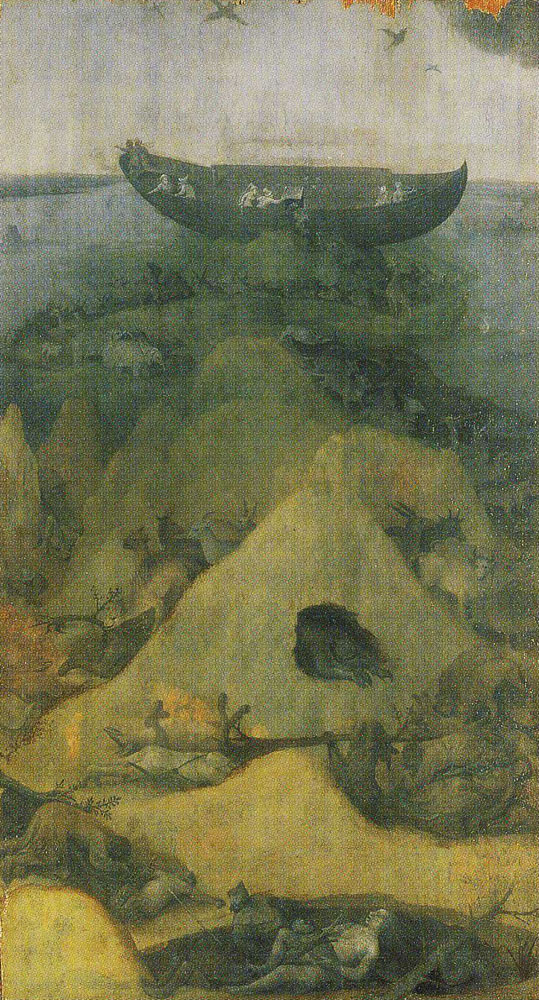
(“The Flood” by Hieronymus Bosch)
Read pages 18-21 in the Xaverian Charism Project.

(Above painting “Table for 5000, Please” https://ifiwalkedwithjesus.com/matthew-1415-21-jesus-feeds-5000-and-then-some/)
- Take some time to reflect on the words “ordinary” and “common.” How do they resonate to you at face value? Do you want to be identified with these terms?
- How did Ryken gravitate towards these terms, both in acts of immediate conversion and over time?
- How are Ryken’s definitions of “ordinary” and “common” found in Jesus’ actions with his disciples and thousands of strangers?
 Ordinary and Unspectacular in the Liturgical Year
In the books I read as a teen, “ordinary” was among the bad things a girl could be called. “Ordinary” in that sense signified plain, unremarkable, unexciting, unattractive. Yet “common” would have been worse because the connotation there implied being from a low social standing and possibly of loose morals. So when I came to St. Joe and started to hear about the “ordinary, unspectacular flow of everyday life,” I reacted in two ways. The innate sense was to consider “ordinary” are boring, blah. The other reaction, though, was to understand what Ryken and his Brothers meant: that God is found in those normal, unremarkably days, the ones where we just slog through. Exciting times are rare, so searching for that “high,” so to speak, all the time won’t ever be satisfying. It leads to constant disappointment. Instead, God journeys with us all the time, on the blah days, the happy ones, when we are at the mountain tops, and when we’re at our lowest. “Ordinary” really signifies most days. That idea continually calls me to try to be more present in each moment instead of reflecting on the past or worrying about the future.